
Bean to Bar: Understanding Fermentation In Chocolate by Christopher Shockey
And Earth Archetypes Webinar

I was listening to the news while driving to a mozzarella class yesterday. It was peppered with the stories that have become all too familiar: economic hardship, tariffs, climate change, the fallout of war. As I sipped my coffee and delighted in my chocolate chip zucchini bread (swap out sour cream for kefir or yogurt!), I started thinking about the delicious foods and drinks I consume that come from countries hit hard by all of these headlines.
In our modern, industrialized world, nearly everything has been commodified, and the distance between us and our food has grown exponentially. And we are seeing the consequences. As I felt overwhelm creep in, I reminded myself that change starts small and grows mighty wings. Although I am not a proponent of tariffs, I do believe they are shedding light on the challenges of a global economy, the difficulties we are facing in our changing world, and how those changes are affecting our fellow humans across the planet.
Some of my favorite beans, coffee and chocolate, are being adversely affected by climate change and global uncertainty. Before jumping into the following post from Christopher Shockey, please consider attending our webinar this week (free for members!), of which I am particularly excited. Hosted by guest Amber Peoples, The Earth Archetypes Webinar invites us to acknowledge that Earth is our home, a place to work in community with one another and offers an opportunity to discover your own archetype. Hope to see you there.
And now on to chocolate.
Admit it. Chocolate just might be one of your favorite fermented foods. Mine too. The phrase bean to bar used to bring up lovely chocolate bars I have known briefly, but now it is the beans. But, man, the beans will stay with you.
By understanding the bean to bar process, you will learn the role of fermentation in chocolate and meet our new friend and Oaxacan chocolatier Antonio as he develops and introduces more traditional processes and flavors.
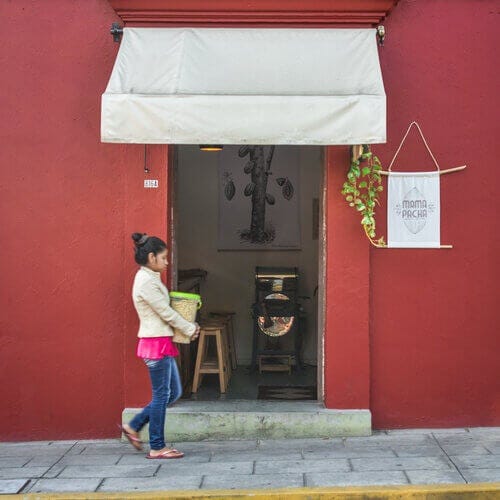
Our visit to Antonio and his beautiful store came through serendipity. We just finished teaching at the Ferment Oaxaca 2021 festival and were taking a day to meet friends we had made from the last conference before the pandemic when we were introduced to Antonio. To his credit, he agreed to meet with us the following day to share his knowledge and practice his English.
When you step over the stone threshold at Mama Pacha, you see a beautiful, well-loved cacao mill set against the far wall, but it's the smell of chocolate that turns your head to take in the rest of the shop. The morning we arrived, all the steps in the process were underway by Antonio and two employees. Bins of coffee beans, both fermented and unfermented, freshly ground chocolate liquor, cocoa butter being slowly transformed in a sous vide, beans roasting in an oven, pots of liquid chocolate being turned, and chocolate chips being formed by hand. It was a bit overwhelming in a perfect way.
Starting with the Bean
Before beans, there were trees and fruits.
Bean Trees
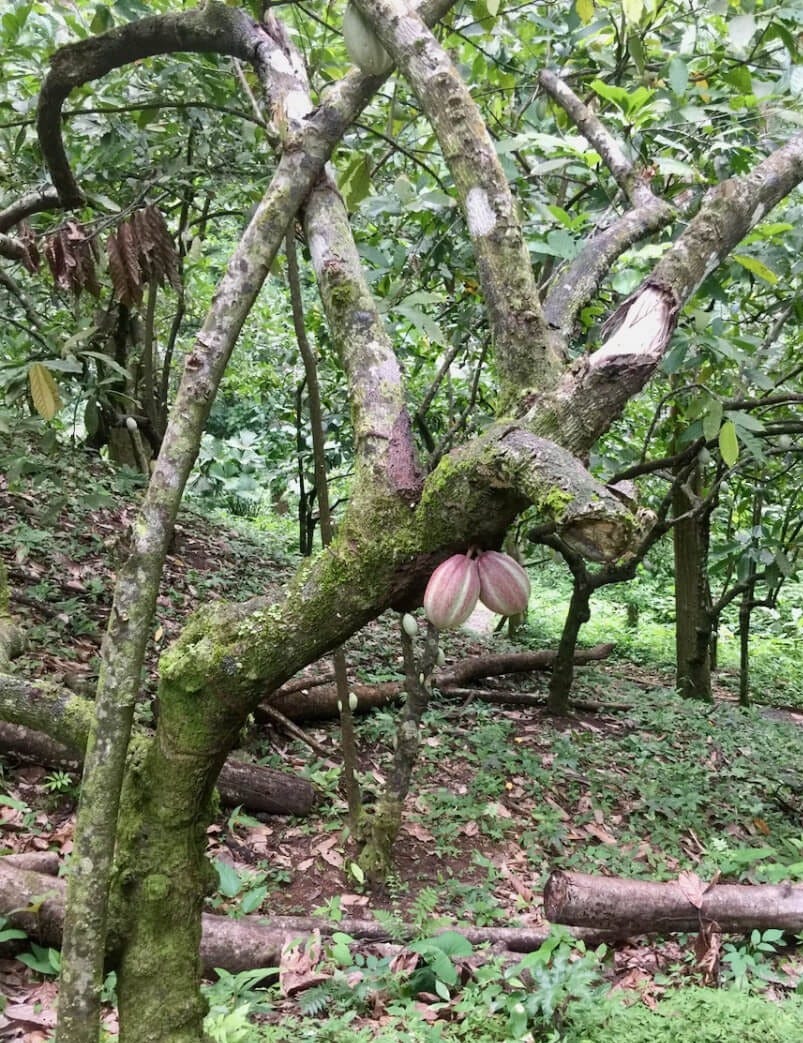
The beans are really seeds of the Cacao fruit, as Kirsten learned when she visited a cacao plantation in Costa Rica a few years ago. In this area of Mexico, they harvest cacao fruits twice a year, during the dry season in April and again during the rainy season in October.
Cacao Pods
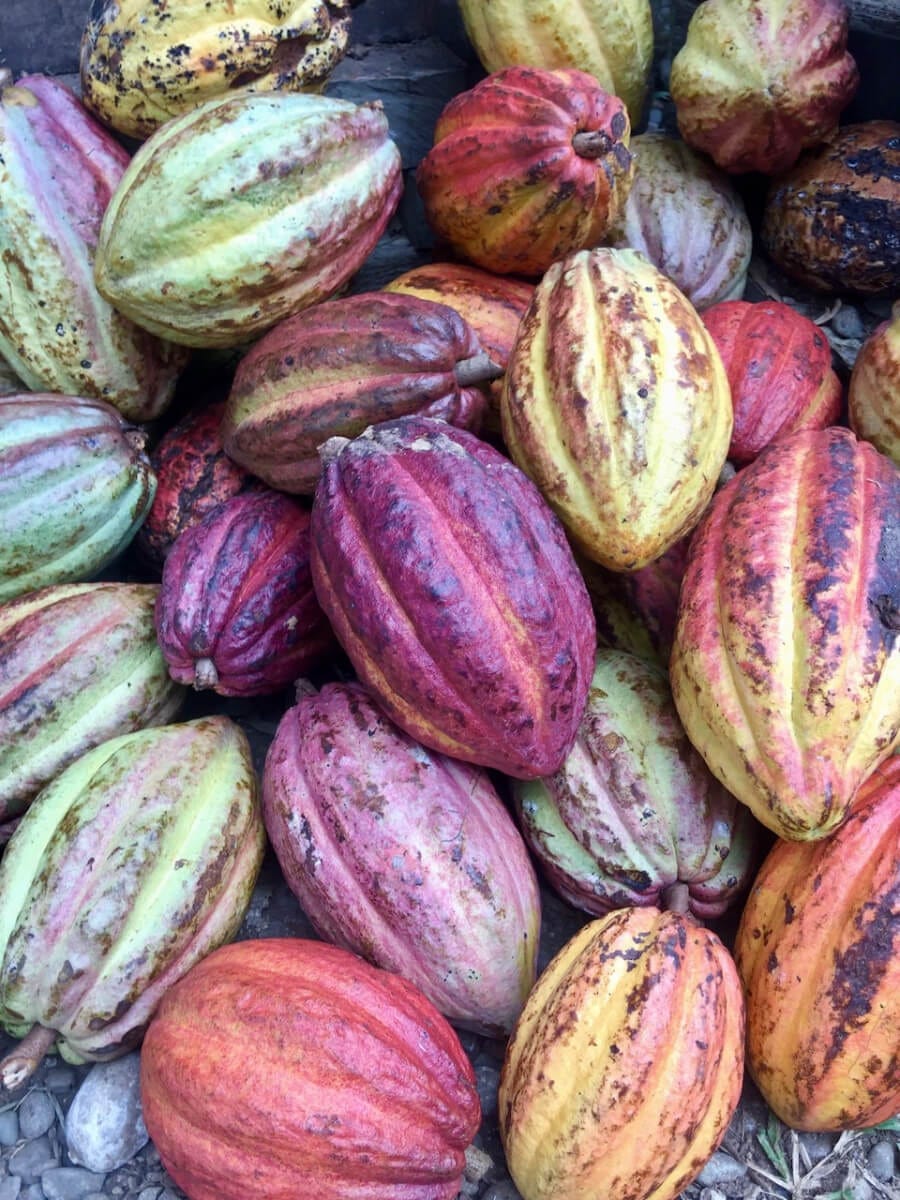
The pods are harvested, but the beans are within.
Cacao seeds
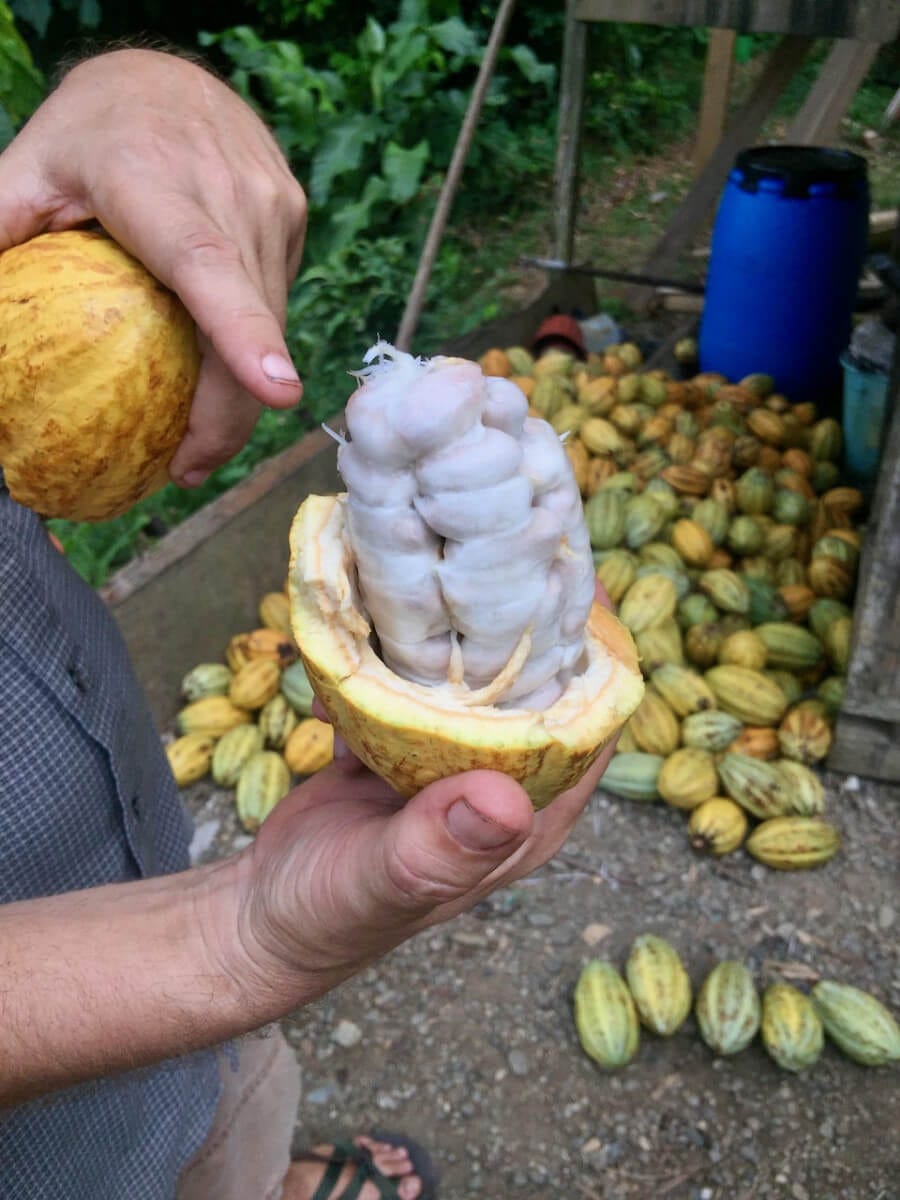
Fermentation of the pulp
The mucilage must be removed to free the beans, and that's where fermentation comes into play, although we learned from Antonio that fermentation is not the traditional Mexican process. Before the Spaniards arrived, chocolate was consumed as a drink. This spontaneous fermentation (sometimes you see this referred to as curing) raises acidity through the work of yeasts, lactic acid bacteria, and acetic acid bacteria. Next, the beans are dried, usually in the sun, until the result is something like what Antonio shows us below.
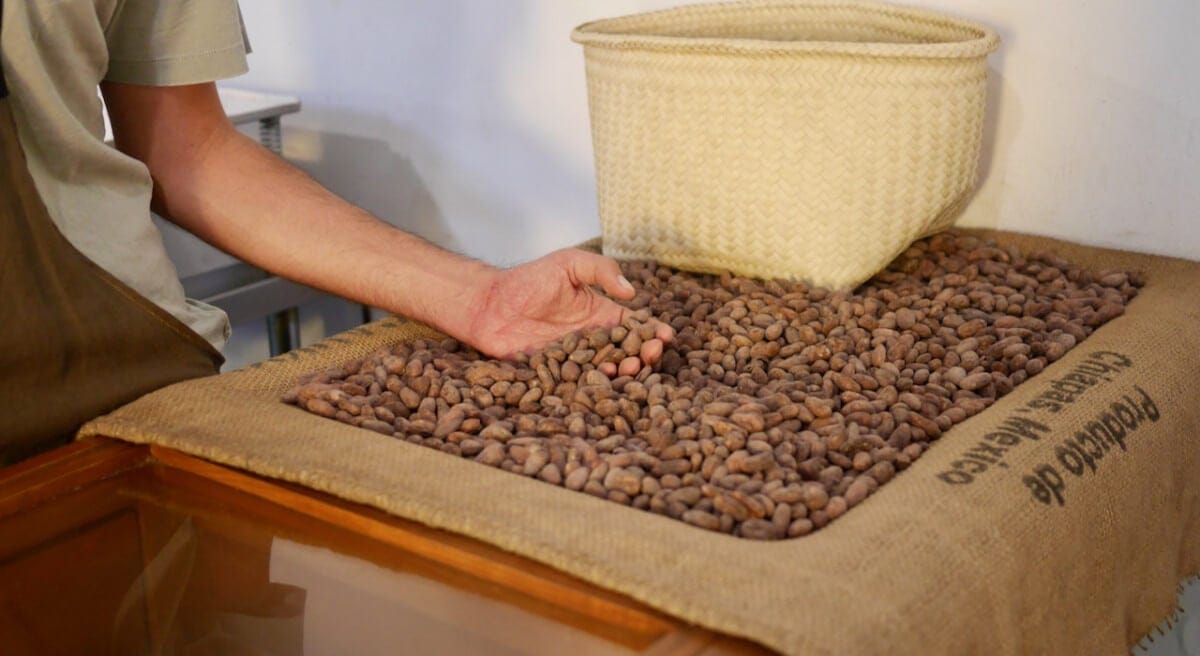
However, if the end result is drinking chocolate, traditionally, the beans were washed and dried, resulting in a uniform coloring like these beans that were about to be milled for drinking chocolate. You can see the other ones in the background as a comparison.
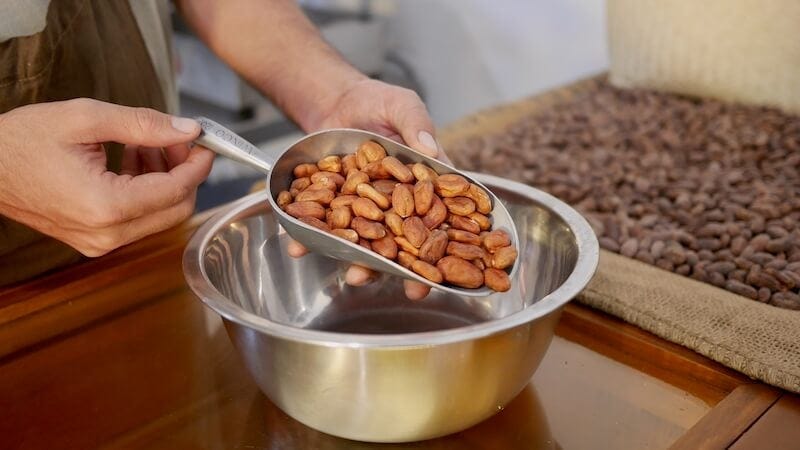
Roasting
The fermentation party definitely stops at roasting, where temperatures exceed 212°F but rarely go over 300°F. Antonio told us he typically roasts at lower temperatures, usually around 250°F, to bring out the flavors of the beans. Still, some big chocolate makers to the other extreme and roast at higher temperatures to do just what a french roast in coffee does - mask the imperfections in the beans by burning them and thus introducing a charred taste instead. You didn't think french roast was about bringing out the flavor in the coffee bean, did you?
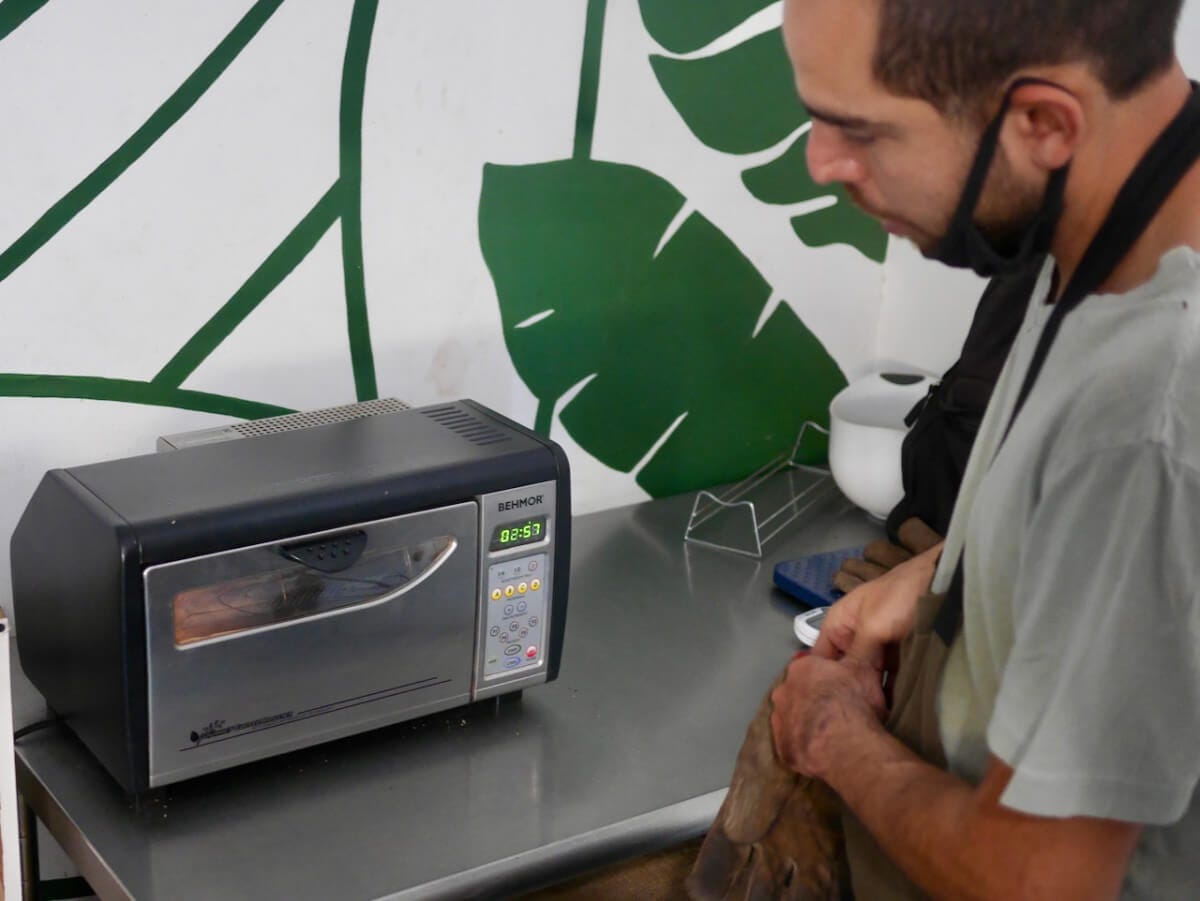
We learned roasting is about more than flavor - it helps separate the outer husk that you see in the above pictures of the beans from the nibs within - which is where all the magic comes from in the steps that follow. Winnowing the husks reminded us of processes we use when removing the husks from soybeans to make tempeh.
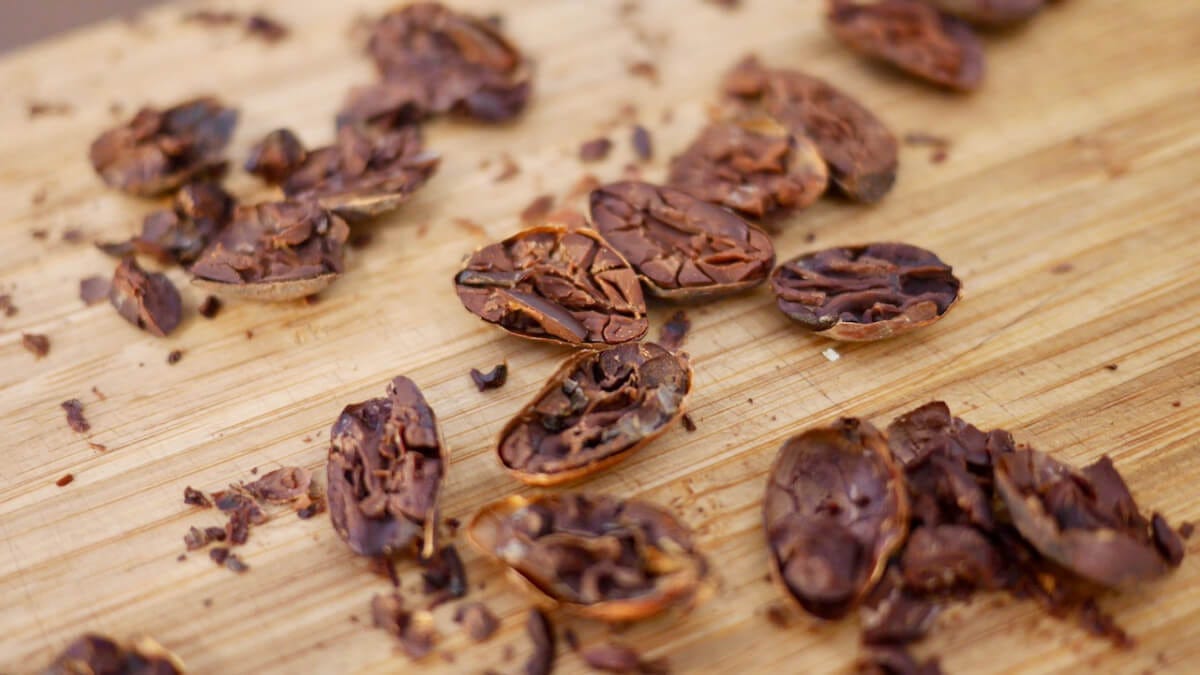
Grinding the nibs
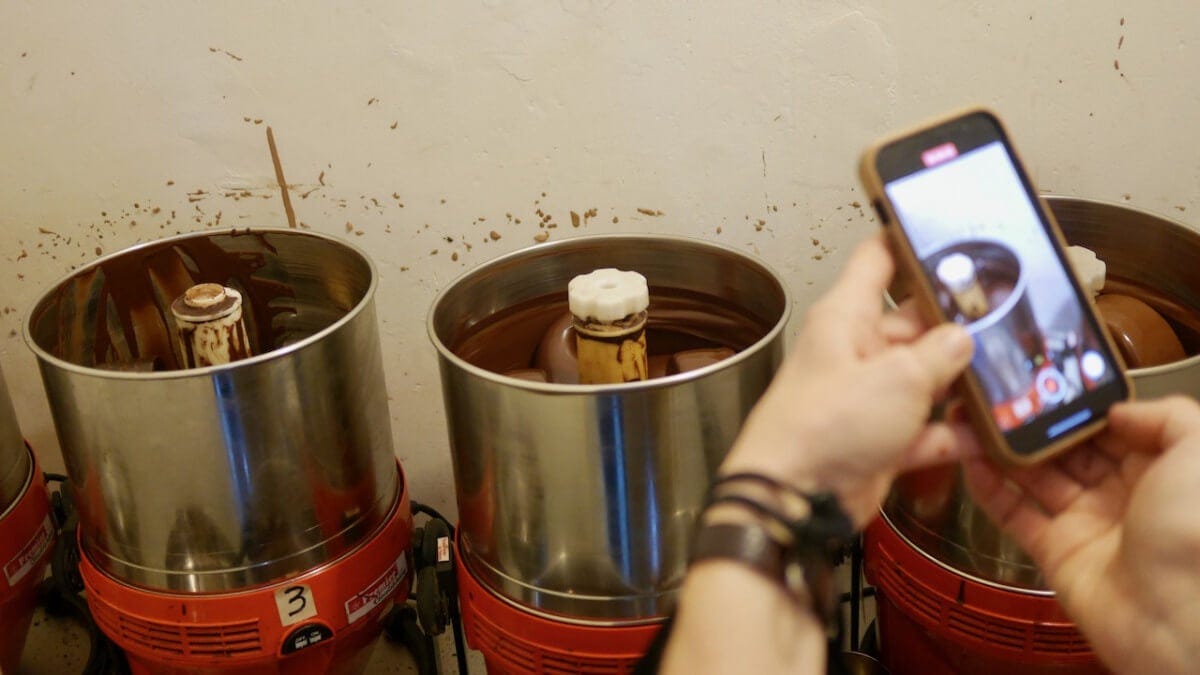
The tiny closet of a room just contained a light, a table, and the grinders lined up and grinding away at the nibs. The smell and heat generated from hours of grinding were most welcoming, like a chocolate womb. The result is cocoa liquor or cocoa mass, and it's pretty beautiful.
Mixing, Tempering, Molding
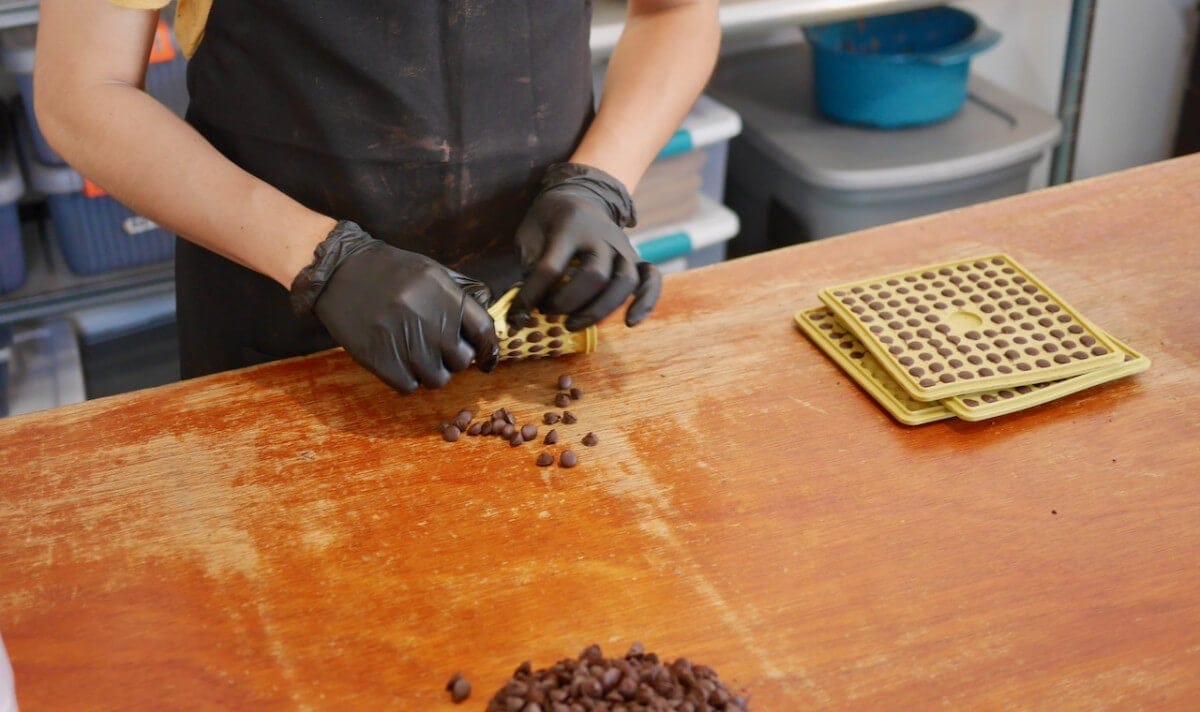
The magic continues as the chocolatier decides the mix of liquor, cocoa butter, sugar, and other adjuncts for the final bar (or chip) in the case of what they were working on when we were there - handmade chocolate chips. Yes, they are still made by hand with silicone molds and a steady hand.
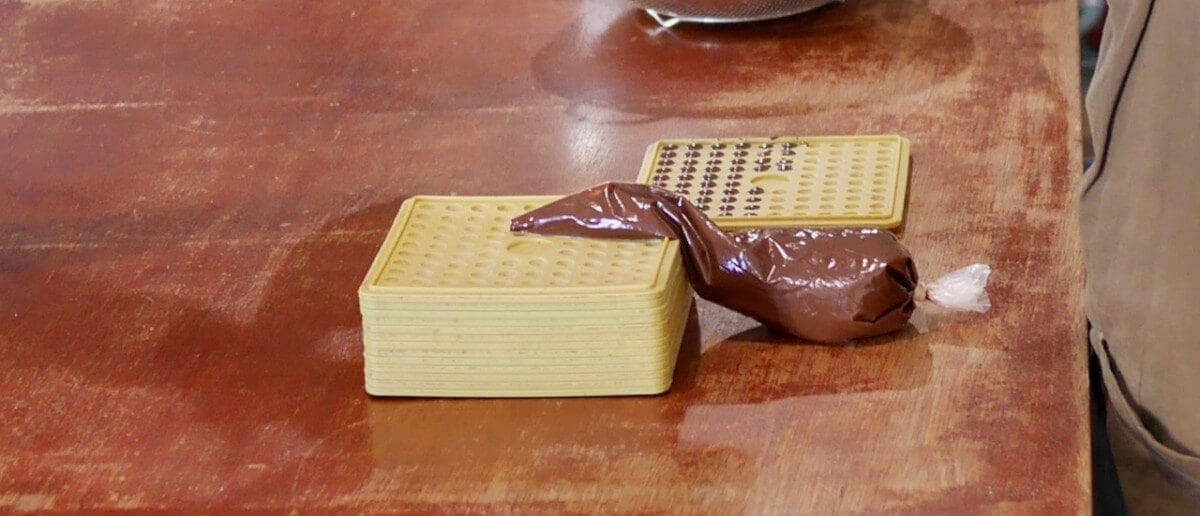
After the chocolate goes in the molds, it gets refrigerated for a while, then lots of popping of the chips.
Tasting
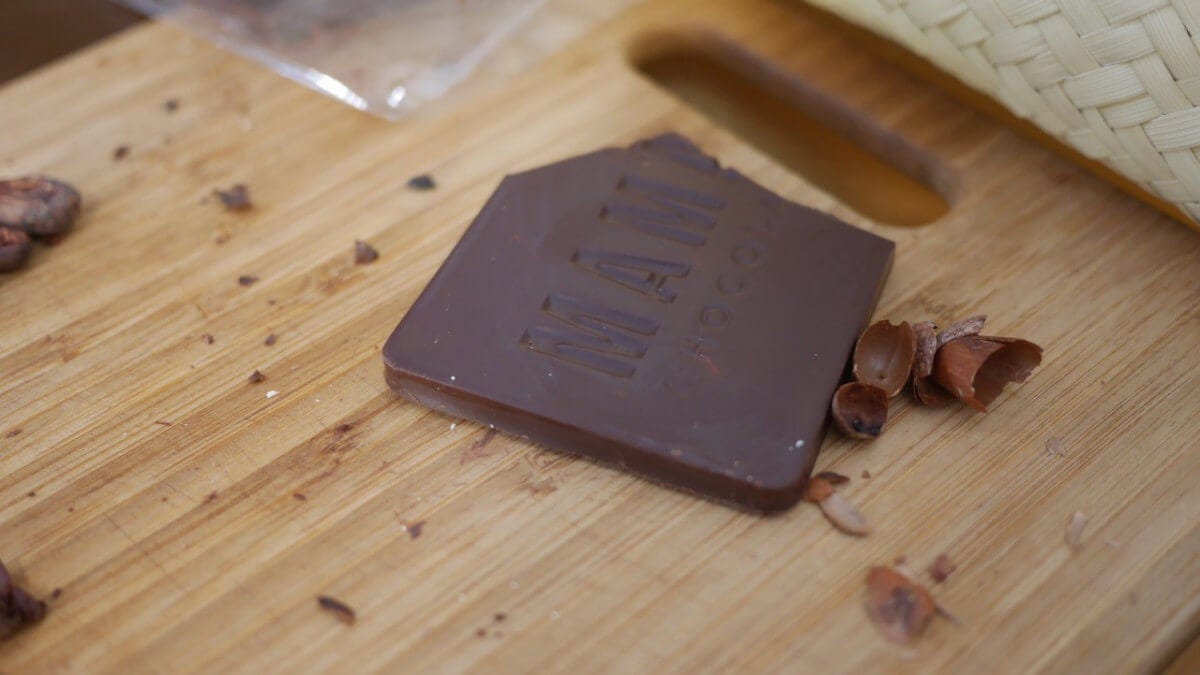
Like all good fermentations, taking the time to learn what is possible and what you like is important. After Antonio's guidance, we learned to taste the combinations of cocoa, butter, vanilla and sugar and to just begin to appreciate the true deep bean flavors expressing themselves in the bar. So next time you unwrap your favorite bar take a little more time with it to fully appreciate the journey those beans have taken.
Thank you for your support of The Fermentation School. We would love to hear from you. How has climate change affected your fermentation journey? How can we be better prepared for the challenges ahead? How are you connecting with your community, your local farmer, your food? Together we will flourish!
I have to be honest, as a bean to bar maker by livelihood (I also have a bean to bar school and write a Substack publication here, The Next Batch School) I am used to seeing so much misinformation on TikTok etc about our process, I saw this pop into my inbox and thought "oh no." But! I was so happily surprised to read it. Your fermentation readers might also enjoy Raven Hanna's substack, One Cacao Tree--she is a microbiologist by training, and grows cacao in Hawaii, and is the pioneer of small (very very small) cacao ferments. She did a really fun cacao miso project awhile back. For folks in San Francisco, Julia of J Street Chocolate came to bean to bar from a deep love of fermentation, and uses upcycled ferment ingredients in her chocolate. Thank you for this post!